
What is a Website or Landing Page Conversion Rate?

A page conversion rate is the percentage of visitors who complete a desired target action out of the total number of visitors to a webpage.
For example: If 100 people visit your landing page and one person submits a request form, your visitor-to-lead conversion rate is 1%.
As an agency, we frequently hear questions and statements like these from clients:
- "Another agency promised us a specific conversion rate. What percentage can you guarantee?"
- "What is the average conversion rate for the websites you build?"
- "We need an X% conversion rate."
- "Can you just increase our conversion rate?"
Let’s break down how this actually works.
Definition and Key Factors
A webpage's conversion rate—the ratio of users taking a target action (a phone call, a submitted form, a completed purchase) to total visitors—depends on much more than just persuasive content and a great design. It is heavily influenced by the characteristics of your traffic and your specific acquisition channels.
Traffic coming from different sources will yield completely different conversion rates for the exact same webpage. If a specific channel shows a lower conversion rate, it often simply means that the audience arriving from there is "colder" and not yet ready to take the action you are asking for.
Benchmarks and Standards
What is considered a "good" conversion rate? For general self-assessment, you can use the following benchmarks:
- For a typical marketing landing page selling B2B services, a solid conversion rate into a lead is usually between 0.5% and 5%.
- The rate is generally similar, or slightly lower, for a product page in an e-commerce store.
- However, for a short, simple lead-capture page (e.g., "Enter your email and we will send you a free guide"), the conversion rate can easily reach 15% to 25%. In this scenario, one in four visitors might subscribe.
The Bottom Line
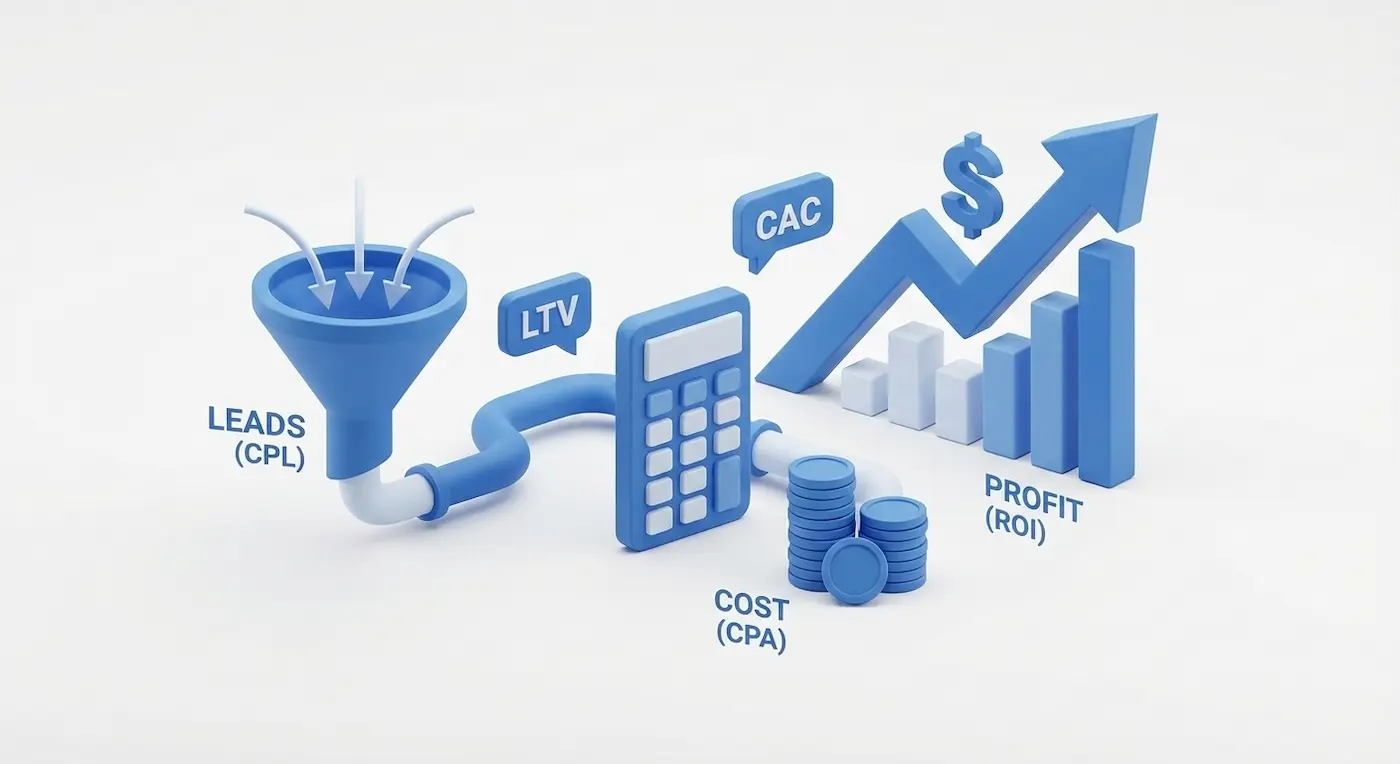
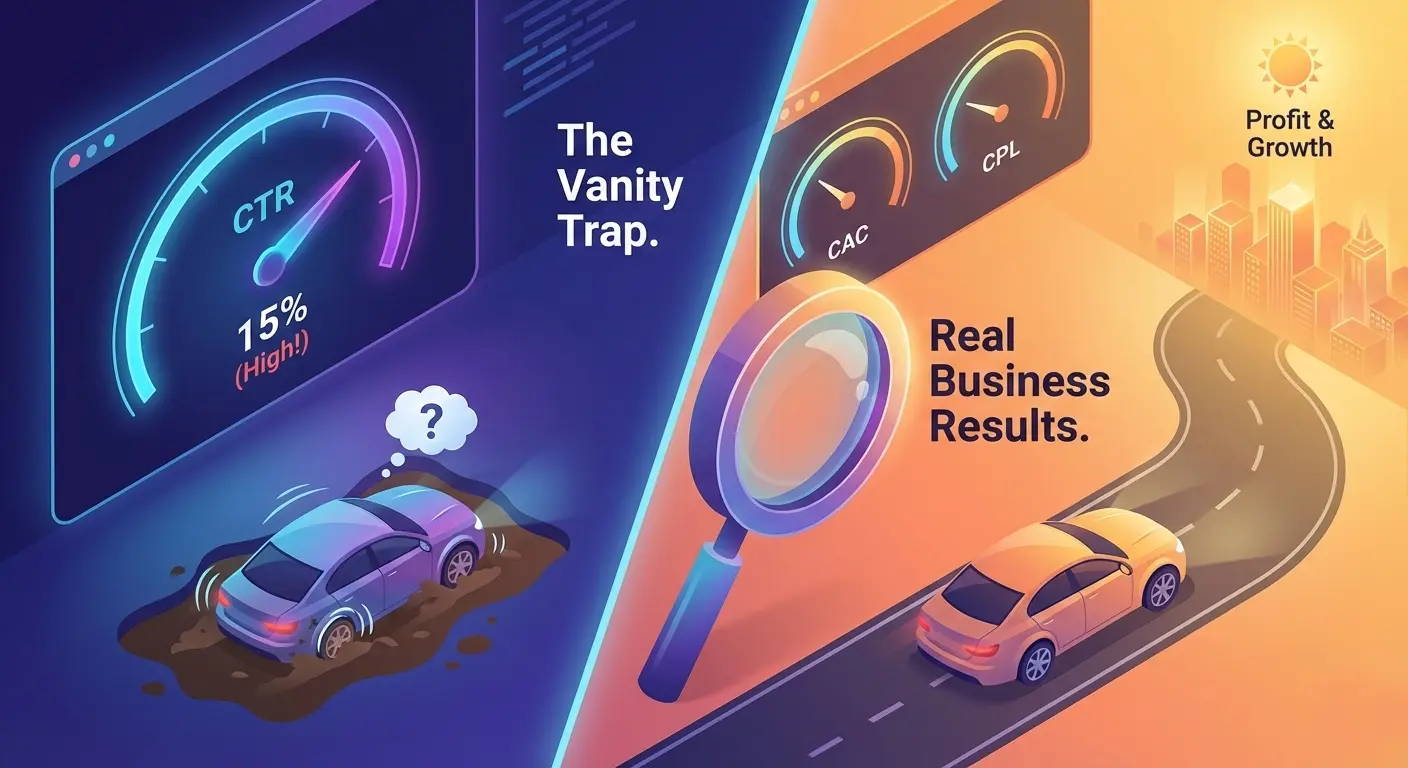
When analyzing performance, your primary focus should always be on the ultimate business metrics: Cost Per Lead (CPL) and Customer Acquisition Cost (CAC).
Sometimes, an acquisition channel with a lower conversion rate is actually more profitable because the cost of that traffic is significantly cheaper. A conversion rate is not an end in itself and should never be evaluated in a vacuum, separated from other financial metrics.
Obviously, the higher the conversion rate, the better. But realistically, a business with a landing page converting at just 0.5% might be highly profitable, while another business boasting a 7% conversion rate could actually be operating at a loss.
Read new articles:




Рентабельные рекламные кампании в Яндекс.Директ
Настроим и будем вести контекстную и таргетированную рекламу для вашего бизнеса
Создадим систему привлечения новых клиентов
Уменьшим цену входящего звонка и заявки
Увеличим заказы на маркетплейсах: Ozon, Yandex Market, WB
Подготовим понятные отчеты и аналитику