
CRM Implementation: Why Processing Leads via Email Kills Your Sales
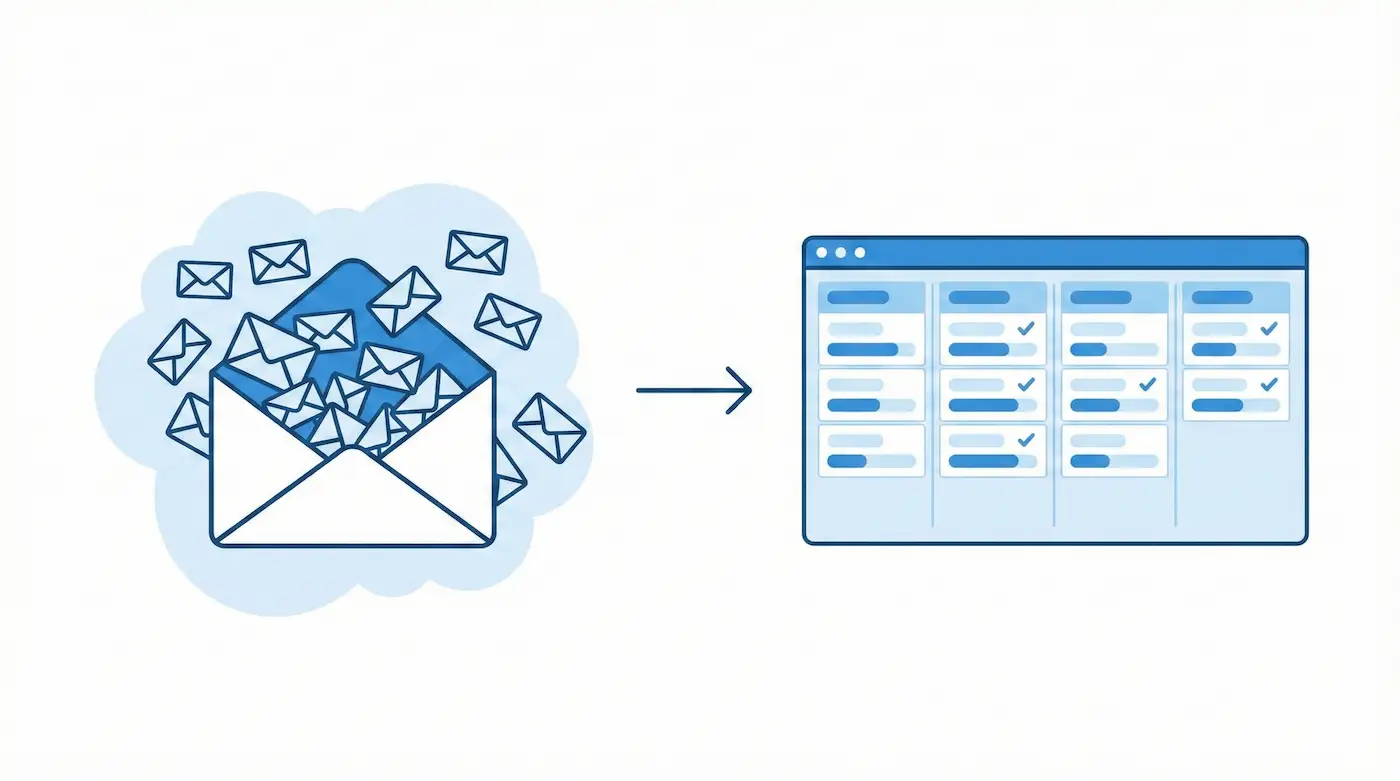
You’ve invested money in advertising, built a great website, and set up lead capture forms. A client visits, submits a request, and... it flies off as an email to some generic info@yourcompany.com address.
When starting a business, getting 1-2 leads a day makes this seem perfectly normal. But when leads grow to 10, 20, or 50, your email inbox turns into a "Bermuda Triangle" where your potential revenue vanishes without a trace.
Let's break down why handling leads via email kills sales and why integrating your website with a CRM system is absolutely necessary.
1. Why Email is a Lead Graveyard
Managing leads (requests) through email or Excel spreadsheets has critical flaws that stunt business growth:
- The Human Factor and Speed: A manager steps out for lunch, the email lands in spam, gets accidentally deleted, or they simply forget to reply. A client goes "cold" in 15-30 minutes. If you don't call back quickly, they will go to a competitor. Email doesn't offer automatic reminders like, "Call the client back in an hour."
- Lack of History and Context: A client calls back a month later. Who spoke with them? What was agreed upon? What discount was promised? To figure this out, you have to dig through hundreds of sent emails.
- Inability to Manage: The business owner cannot see the real picture. How many leads are currently being worked on? At what stage is a major client stuck? Why did a deal fall through? Email doesn't provide analytics; it only provides chaos.
- Integrations: A modern CRM offers built-in features like email marketing and client portals right "out of the box." It also provides a large list of easily configurable integrations with third-party services. For example, exporting lead forms to Google Sheets, email marketing platforms, or other popular services.
The Result: You spend money to acquire a lead, and then lose it during the processing stage because you lack a system.
2. The CRM System: Order Instead of Chaos
CRM (Customer Relationship Management) is not just a software program; it is a system for managing client relationships.
When your website is integrated with a CRM, a lead doesn't just drop into an inbox. It automatically creates a client card in the system and assigns a task to a manager.
How it looks: Instead of a list of unread emails, you have a visual "Sales Funnel" (a Kanban board), where every lead is a card moving through specific stages:
- New lead
- In progress (Call made)
- Commercial offer sent
- Thinking / Making a decision
- Successfully closed (Money in the bank)
Not a single client will get lost because the system itself will remind the manager if a lead has been forgotten.
3. The Ultimate Secret: End-to-End Analytics
However, the most crucial advantage of integrating your website and CRM is the ability to build end-to-end analytics. This is the cornerstone of modern marketing.
Scenario WITHOUT CRM (Analytics "by eye"): You spent $500 on Google Ads and $500 on Facebook Ads. 100 leads arrived in your inbox. You sold some products and made $2,000.The Question: Which ads actually worked? Google or Facebook? You don't know. You only see the total number of leads, but you don't know which ones converted into actual cash.
Scenario WITH CRM (End-to-End Analytics): When a request is submitted, the website sends the CRM not only the name and phone number but also a "tail" of data (UTM parameters): where the person came from, which ad campaign they clicked, and what keyword they used.
- A deal is created in the CRM marked: "Source: Google Ads, Campaign: Search_NewYork."
- The manager works with the client and, a month later, closes the deal with the status: "Successful, Amount: $1,500."
- The analytics system connects this data: it sees that a $1 click from Google ultimately brought in $1,500 in revenue.
The Result: You know the exact ROI of every advertising channel. You can clearly see that Google brings in real money, while Facebook only brings in "empty" leads who don't buy. You turn off the ineffective ads and invest your budget where the profit actually is.
Conclusion
Integrating your website with a CRM is not a trendy optional feature; it is the bare minimum requirement for any business that wants to grow. It is the transition from intuitive selling to a systematic, manageable process based on hard numbers, not feelings. Stop losing leads in your email inbox—start managing them.
Read new articles:






Рентабельные рекламные кампании в Яндекс.Директ
Настроим и будем вести контекстную и таргетированную рекламу для вашего бизнеса
Создадим систему привлечения новых клиентов
Уменьшим цену входящего звонка и заявки
Увеличим заказы на маркетплейсах: Ozon, Yandex Market, WB
Подготовим понятные отчеты и аналитику