
What Kind of Design Sells? Why a Beautiful Website Doesn't Guarantee Leads
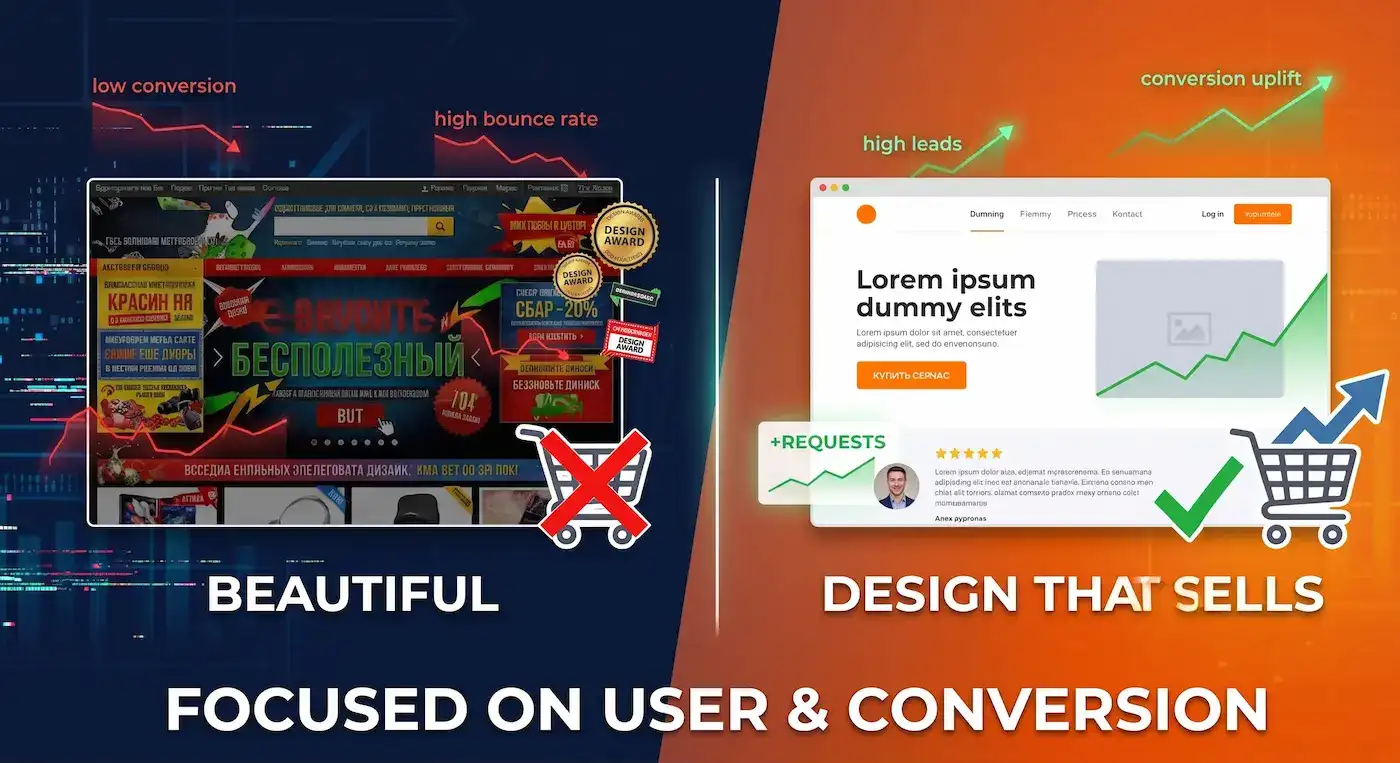
The request "make us a design that sells" is both the most common and the most dangerous request in web development. It's dangerous because a "design that sells" simply doesn't exist.
Design is merely a format for presenting information. It’s the packaging. Yes, you can arrange text and graphics in various ways: you can make it modern, minimalist, or vibrant. But if you write meaningless copy and decorate it with random stock photos, will that screen start selling? Absolutely not.
If the core messaging of your website is flawed, and if you fail to address the actual pain points of your target audience, no amount of brilliant design or fancy animations will save you.
It’s Not the Website That Sells; It’s Your Messaging and Your Sales Team
Let's be honest: a website is a tool for warming up prospects and capturing leads. The actual selling is ultimately done by your sales department (or by the quality of the product itself in the case of e-commerce).
The main problem many entrepreneurs face is a fundamental misunderstanding of the website's role in the sales funnel. They genuinely believe that if they invest money in a beautiful interface and drive paid traffic to it, sales will just happen automatically.
In practice, it often turns out that sales reps are used to working like customer support operators: they manage existing clients perfectly well but don't know how to turn "cold" website interest into a closed deal. The website might bring in a highly qualified lead, but if the sales manager calls back two days later or fails to handle basic objections, your "design that sells" is completely powerless.
The Positioning Trap: "We Already Have a Website"
A website is like a wardrobe choice. You wear a suit to the theater, sportswear to the gym, and a swimsuit to the beach. Each outfit serves a specific purpose in a specific context.
The phrase "we already have a website, we don't need a new one" often masks a serious underlying problem. The real question is: what kind of website do you actually have?
- A digital "business card" created five years ago just to have a presence on the internet?
- A heavy corporate portal overloaded with the company's history?
If your current goal is to run PPC campaigns and generate leads "here and now," an old corporate website won't cut it. You need a marketing website (or a Landing Page) specifically architected to convert targeted traffic.
Designers vs. Marketers: Who Should Build Your Website?
Website creation is often delegated to "pure" programmers or graphic designers. Both view the project through their own specific lenses:
- Programmers are focused on how to build it. They might reinvent technical wheels or build complex databases, but they often completely overlook how the end-user will actually interact with the interface.
- Designers (especially juniors) often treat the website as a canvas for self-expression and aesthetics. Their primary goal is to impress their peers and collect likes on platforms like Behance or Dribbble.
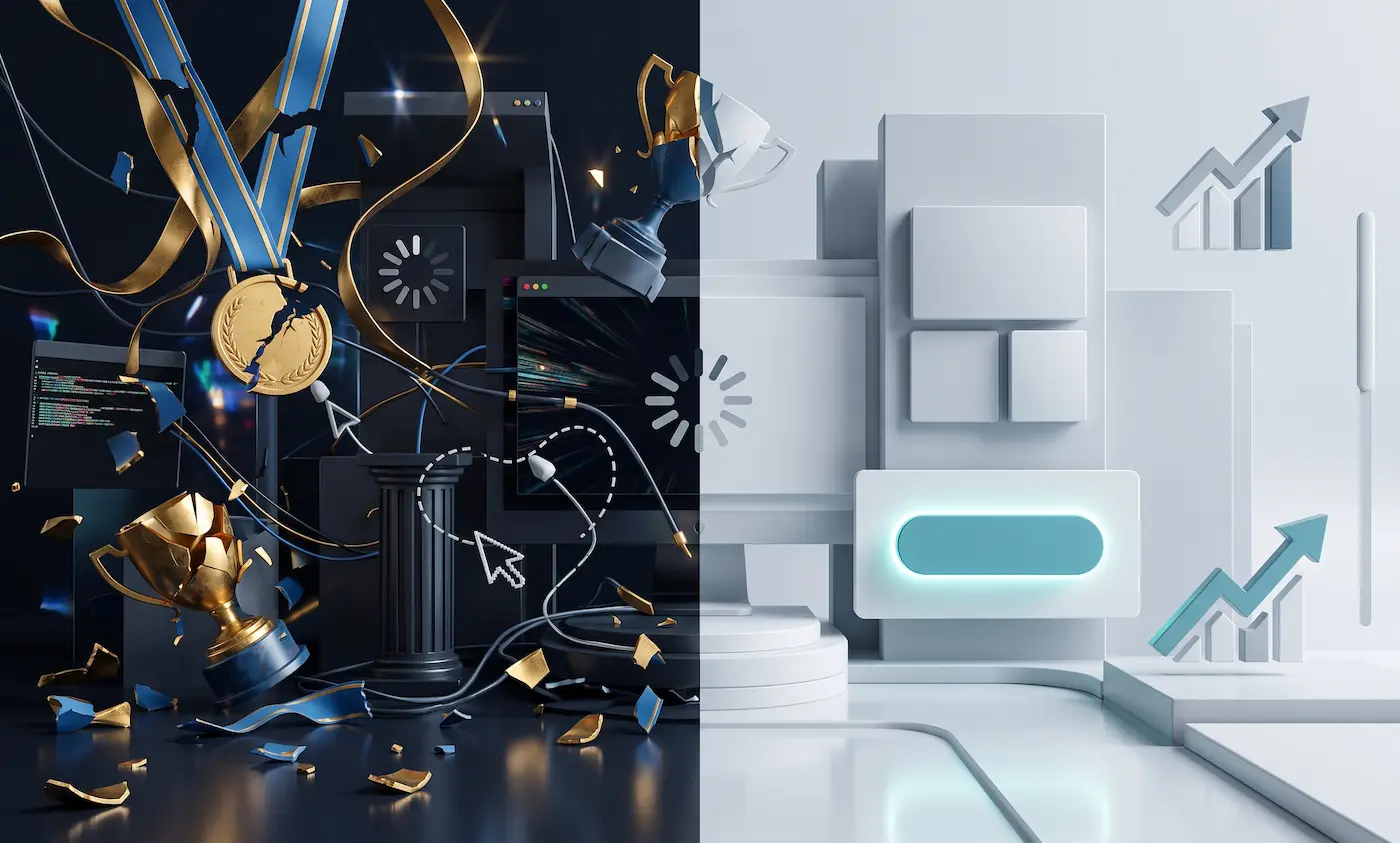
Wanting to wow the audience at a web design contest and needing to sell your B2B product are two fundamentally different tasks.
Always remember: when you commission a highly unique, ultra-creative interface that breaks standard navigation patterns for a commercial website, you are effectively burying your own conversion rates.
Users don't visit your site to get aesthetic pleasure from artistic experiments. They come to solve a specific problem. The faster and clearer you present the solution, the higher the chances of capturing that lead.
Conclusion: How to Build a Tool That Actually Works
If you want a website that generates revenue, it must be designed by a specialist who understands the intersection of marketing, design, and technology.
- First comes the messaging. Studying the target audience, analyzing competitors, and formulating a strong Unique Selling Proposition (USP).
- Then comes the structure (UX). Mapping out the user journey to make the process of leaving an inquiry as seamless and logical as possible.
- Only after that comes the design (UI) and code. Packaging those core messages into a clean, modern, and lightning-fast interface (for example, using Webflow).
Do you need a website that converts traffic into actual leads rather than just taking up space on the internet? Get in touch, and we’ll discuss your project through the lens of real business metrics.
Read new articles:





Рентабельные рекламные кампании в Яндекс.Директ
Настроим и будем вести контекстную и таргетированную рекламу для вашего бизнеса
Создадим систему привлечения новых клиентов
Уменьшим цену входящего звонка и заявки
Увеличим заказы на маркетплейсах: Ozon, Yandex Market, WB
Подготовим понятные отчеты и аналитику