
B2B Long Sales Cycles: How to Nurture Leads for 6 Months Without Being Annoying
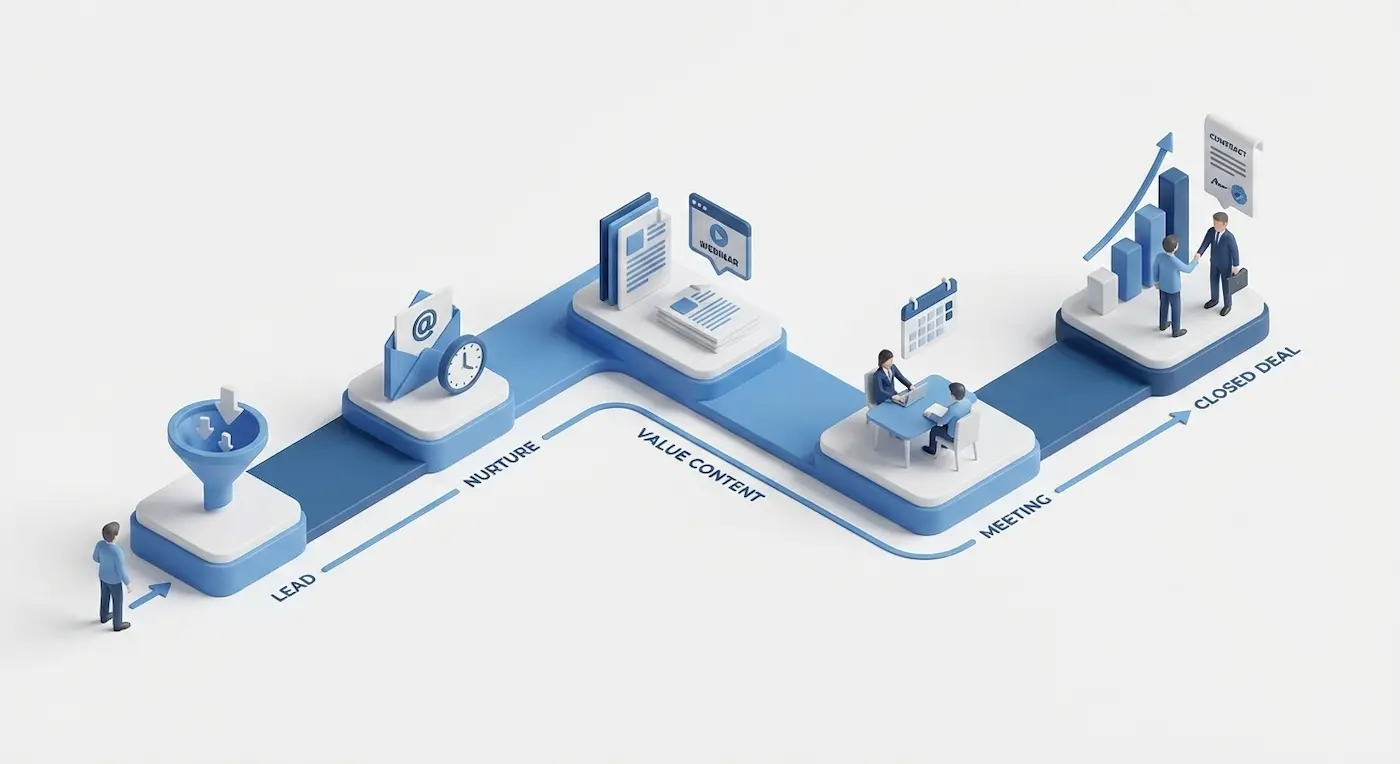
Introduction: Why have they gone quiet?You sent the proposal. The meeting went perfectly: the client nodded, asked the right questions, and even joked at the end. Mentally, you’ve already spent the commission. And then... silence.
A week passes, then two, then a month. You send the standard follow-up: "Hi John, did you have a chance to review the proposal?" John replies with a one-liner: "Still in the approval process." Another month goes by, and you feel awkward reaching out again, not wanting to look like a desperate beggar. The deal slowly dies in your CRM under the "Thinking" status.
Welcome to the reality of B2B sales. In IT integration, consulting, construction, or complex SaaS, a sales cycle of 6 to 18 months is the industry standard. The problem isn't your product. The problem is that most companies know how to run a sprint (sell and forget), but they have absolutely no idea how to run a marathon.
In this article, we will break down the Lead Nurturing strategy. This is a step-by-step guide on how to stay on your client's radar for half a year, be useful rather than annoying, and be exactly "at hand" the moment they are finally ready to sign the contract.
The Psychology of a Long Deal: What are they afraid of?
To understand how to sell "the long game," you need to understand what is going on in the client's head. Why are they stalling?
In B2B (especially Enterprise), there is an old saying: "Nobody ever got fired for buying IBM." But if a middle manager chooses new software, a startup contractor, or a complex service, and the implementation fails—their career is on the line.
The client isn't stalling to annoy you. They are minimizing risks. A group of people (the Decision-Making Unit, or DMU) is involved in the approval process:
- The Initiator: Wants to solve a specific workflow problem.
- The CFO: Wants to cut costs and see ROI.
- The Legal Team: Wants to avoid compliance and contractual risks.
- The Tech Lead: Wants to ensure seamless integration and security.
- The CEO: Wants overall profit growth.
Your nurturing strategy must provide arguments for each of them. If you spend six months sending emails that just say "Buy now, we have a discount," you are only talking to the CFO, completely ignoring the fears of everyone else.
The "Value-Touch" Strategy: A 6-Month Plan
Forget the phrase, "Just checking in." Every touchpoint (email, call, retargeting ad) must deliver new value to the client. We divide this process into three stages.
Stage 1: Awareness & Education (Months 1-2)
The client realizes they have a problem but doesn't exactly know how to solve it yet. You cannot sell aggressively here. You must become a mentor. If you push for a contract now, the client will shut down.
- Goal: Demonstrate expertise and help shape their product requirements.
- Content:
- Guides and Checklists: "10 Mistakes When Implementing a CRM" or "How to Write a Brief for Web Development."
- Market Analytics: "B2B Logistics Trends for 2026."
- Action: Send the client an email: "Hi John, following our chat about analytics, I put together an article on common early-stage implementation mistakes to avoid wasting budget. Thought this might be useful for your internal discussions."
- Result: The client is grateful because you aren't asking for money; you are saving them time.
Stage 2: Comparison & Choice (Months 3-4)
The client knows what they need and is now choosing between you, your competitors, or the "in-house" option. The rational brain takes over. They need numbers, facts, and proof.
- Goal: Prove that your solution is the safest and most effective.
- Content:
- Case Studies: Not just "we are great," but a strict "Problem — Solution — ROI in numbers" format.
- Comparisons: "Webflow vs. WordPress" or "In-house Marketer vs. Agency."
- Webinars: Invite them to a closed session where you break down complex industry challenges.
- Tool: Set up social media retargeting. Let the client see your case studies in their LinkedIn or Facebook feeds. This creates an "omnipresence" effect, making your company look larger and more established.
Stage 3: Decision Making (Months 5-6)
The shortlist is finalized. Now it's a battle against fear ("What if it fails?").
- Goal: Remove barriers and provide guarantees.
- Content:
- ROI Calculators: Help the CFO calculate exactly how fast the investment will pay off.
- Document Templates: An SLA (Service Level Agreement) template, contract drafts, or a First-Month Roadmap.
- Demos/Audits: Offer a free mini-audit or a trial period.
- Action: A face-to-face meeting or a business lunch. Now is the time for the "chemistry" of personal connection.
Tools of "Invisible" Marketing
How do you do this systematically if you have 50 "long" deals? Doing it manually will drive you crazy. You need automation.
1. Drip Campaigns (Email Sequences)
This is not a generic "Company News" newsletter that nobody reads. This is a pre-programmed sequence of emails.
- Day 0: Thank you for the meeting + Checklist.
- Day 14: A highly relevant Case Study.
- Day 30: An invitation to a webinar.
- Day 45: An article on "How to justify this budget to your CEO."
If a client opens the email and clicks the link, your sales rep gets an alert in the CRM: "The client is active! Call them now."
2. On-Site Content Hub
Instead of storing your useful materials as PDFs on Google Drive, publish them on your blog or a "Knowledge Base" section.
- Why this matters: When you send a link to your website, you tag the client with tracking cookies (Pixel). After that, you can "chase" them with retargeting ads. You can't do that with a PDF attachment.
3. Micro-Segmentation
Don't blast everything to everyone. If you are negotiating with a Marketing Director, don't send them an article about the legal nuances of equipment leasing.
- Segment your CRM base with tags:
DMU-Tech,DMU-Finance,Industry-RealEstate. - Your content must directly hit the specific pain points of that exact segment.
The Biggest Nurturing Mistakes (How not to annoy)
The fine line between persistence and annoyance is determined by value.
- The "Ping" Mistake: Emails like "How are things?", "Any updates?", or "Just checking in." These are annoying because you are demanding their attention while offering nothing in return.
- The Frequency Mistake: In B2B, there is no point in writing every week. The optimal rhythm for "sleeping" clients is once every 2 to 3 weeks.
- Egocentrism: Writing only about yourself ("We won an award," "It's our company's birthday"). The client doesn't care. Write about them and their problems.
How to Set This Up Technically
If your website is built on a modern CMS like Webflow, you already have a powerful foundation to execute this strategy.
- Create a CMS Collection for a "Blog" or "Knowledge Base." Regularly publish answers to the questions your clients ask during initial meetings.
- Create Hidden Landing Pages. Build personalized offers for narrow segments (e.g.,
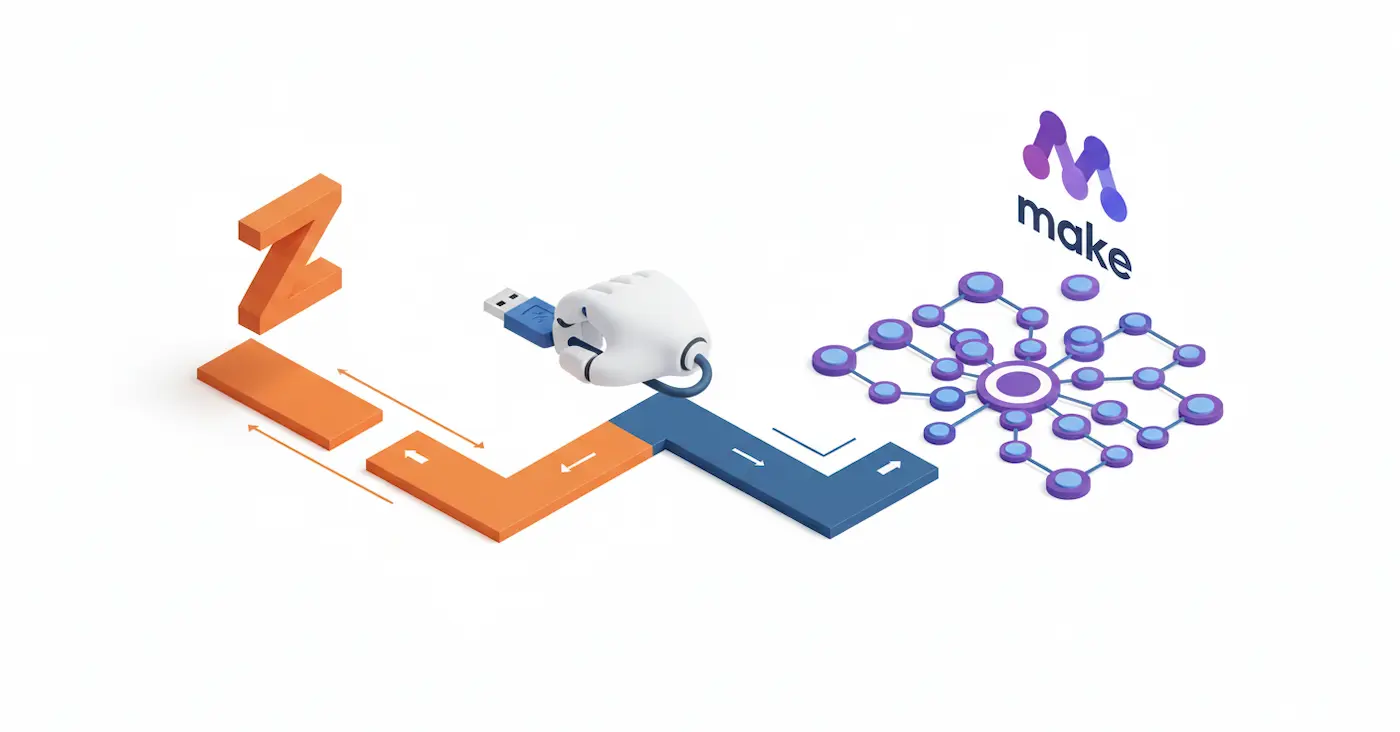
[yoursite.com/solutions/real-estate](https://yoursite.com/solutions/real-estate)) and drive your email traffic there. - CRM Integration: Connect your Webflow forms to your CRM (HubSpot, Pipedrive, Salesforce) using Make or Zapier.
- Track Analytics: Use Google Analytics 4 (GA4) to see which articles have the highest Time on Page. This is a massive indicator—these are the exact topics your clients care about most. Inject these topics into your sales scripts.
Conclusion
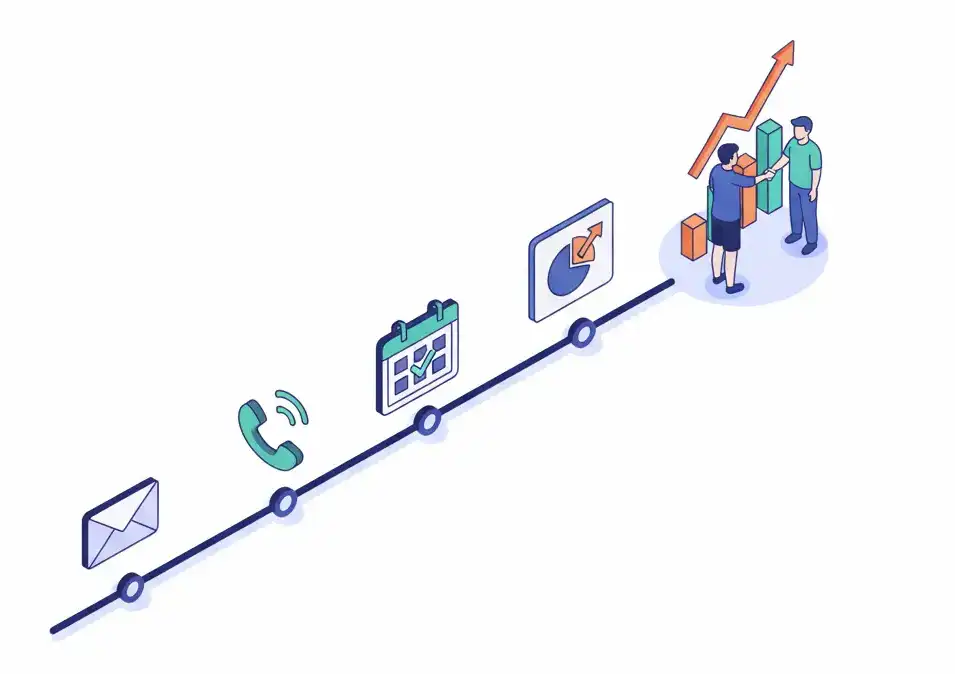
Long-cycle B2B marketing isn't magic; it's discipline. The winner isn't the one who shouts "BUY!" the loudest, but the one who stays close, patiently explains the nuances, and demonstrates unwavering reliability.
When their current contractor completely fails in 8 months, or their budget is finally approved, who will they call? The person who spent the last half-year sending them valuable materials and acting like a true professional partner.
Where do you start today? Open your CRM and filter for deals that have been stuck in the "Thinking" stage for over 3 months. Do not call them to ask, "So, what's the status?" Instead, send them the single most useful article from your blog with the comment: "Saw this and thought of your current challenge. Thought this might help you move forward."
Try it. It works.
Read new articles:





Рентабельные рекламные кампании в Яндекс.Директ
Настроим и будем вести контекстную и таргетированную рекламу для вашего бизнеса
Создадим систему привлечения новых клиентов
Уменьшим цену входящего звонка и заявки
Увеличим заказы на маркетплейсах: Ozon, Yandex Market, WB
Подготовим понятные отчеты и аналитику