
How to Write B2B Case Studies That Actually Close Deals
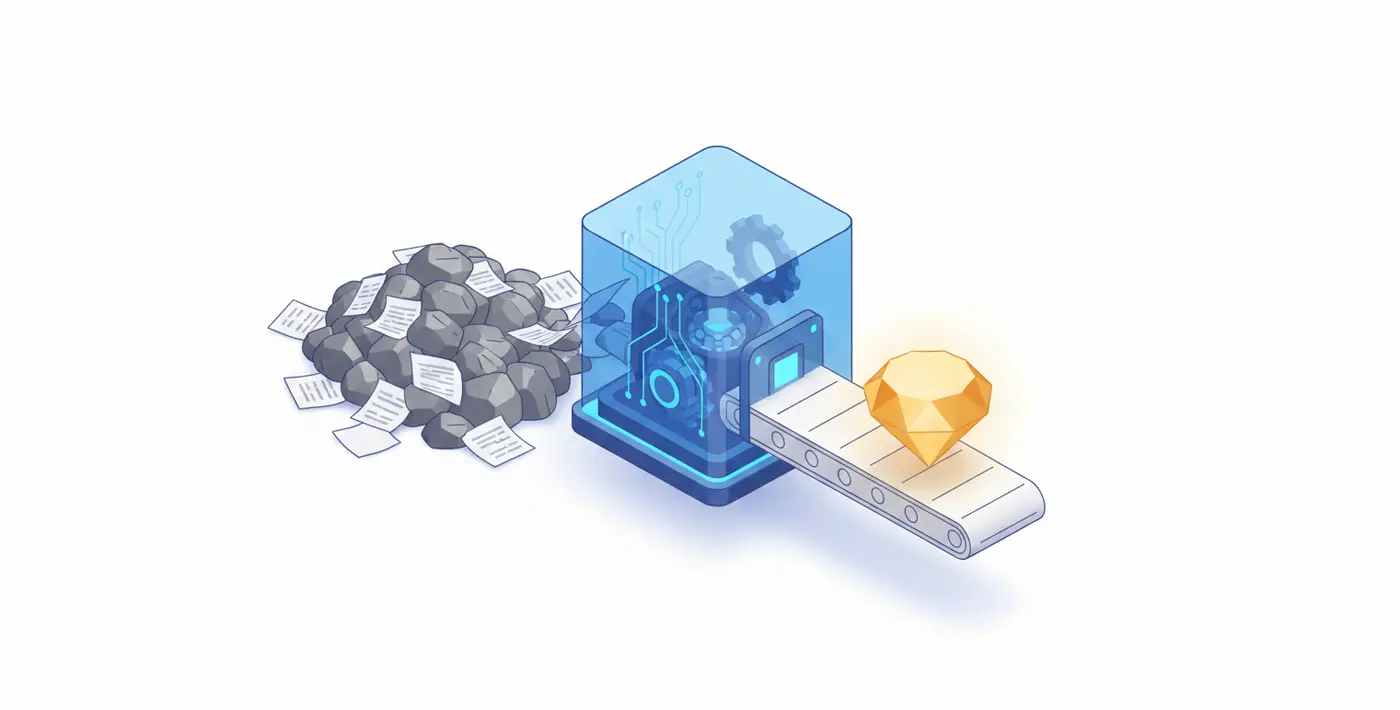
Case Studies That Close Deals: How to Package a Project So the Client Says, "I Want That Too!"
Introduction: Why "Pretty Pictures" Don't Work
Go to almost any digital agency or construction company's website. Open the "Portfolio" section. What do you see? An endless gallery of pretty pictures.
Here is a website we made. Here is a building we constructed. Here is a software system we installed.
For a B2B decision-maker, this is just white noise. A factory director does not buy "website design"; they buy sales growth. An HR director does not buy an "intranet portal"; they buy reduced employee turnover.
If your case study doesn't answer the fundamental question, "Why was this built?", it is useless. Let's break down the anatomy of a case study that works like your best 24/7 sales manager.
1. The Plot: The Hero's Journey
A high-converting case study is always a story, and every good story needs conflict. Instead of writing, "We redesigned a website for XYZ Corp," start with, "The client was losing 30% of their inbound leads due to a complex checkout form. Here is how we fixed it."
Use the P-S-R Structure (Problem - Solution - Result):
- Problem (Before): What was the exact pain point? (Low conversion rates, an outdated brand image, a messy backend architecture).
- Solution (The Process): How did you treat the problem? (Deep analytics, wireframing, API integrations).
- Result (After): What changed? (Measurable data, charts, client testimonials).
2. Numbers Are Your Best Friends
B2B buyers only trust data. Compare these two descriptions:
- Option A: "The site loads much faster and the design is more modern." (Subjective and meaningless).
- Option B: "Core Web Vitals PageSpeed scores increased from 45 to 92. The bounce rate dropped by 15%." (Objective and factual).
What if the client won't share exact sales figures? Use proxy metrics. You can always measure traffic growth, search engine rankings, time on site, or pages per session.
3. Show the "Kitchen" (Your Internal Process)
The client isn't just buying the final result; they are buying your methodology. They have a hidden fear: "What if they just downloaded a cheap template?" Show them your workflow to build immediate trust.
- Include photos or screenshots of your digital brainstorming sessions (Miro/FigJam).
- Show your ugly first drafts, sketches, and wireframes.
- Display what the old website looked like. A terrible "Before" screenshot works flawlessly when placed right next to your beautiful "After" result.
This proves that you engineered a custom solution, rather than just drawing a pretty picture.
4. Social Proof (The Testimonial)
A testimonial should never be overly sweet or generic, like: "Great guys, everything was super!" That looks fake and adds zero value.
Ask the client to write about specifics. A perfect testimonial looks like this:
"We were afraid that migrating to Webflow would be a technical nightmare, but Andrei's team comprehensively trained our marketing department. Now, we save 20 hours a month on content updates alone."
This type of review preemptively handles the exact objections your future clients are currently thinking about.
5. The CTA (Call to Action) at the End
The absolute worst mistake you can make is ending a case study with a period.
The reader is "warmed up." They just saw how brilliantly you solved a business problem identical to theirs. Do not force them to hunt for your "Contact" page. Give them a context-driven CTA right there:
- "Struggling with a similar conversion bottleneck? Let's discuss your project."
- "Want to know how much a custom architecture like this costs for your niche? Get a technical estimate."
Checklist: Is Your Case Study Ready for Publishing?
- [ ] Does the headline promise a business benefit, rather than just naming the client?
- [ ] Is there a clear "Problem / Challenge" section?
- [ ] Are there highly contrasting "Before" and "After" screenshots?
- [ ] Did you explicitly mention the tech stack (Webflow, Make, Wized, Xano)?
- [ ] Is there at least one measurable, numeric result?
- [ ] Is there a conversion button or lead form at the very end of the page?
Summary
A single, deeply researched case study sells infinitely better than 50 superficial portfolio images. Spend a full day interviewing your client, gathering the facts, and beautifully formatting the story. It is a capital investment that will pay off with your very next closed deal.
Need help packaging your projects? We don't just build enterprise websites; we help you articulate your business value.
Read new articles:








Рентабельные рекламные кампании в Яндекс.Директ
Настроим и будем вести контекстную и таргетированную рекламу для вашего бизнеса
Создадим систему привлечения новых клиентов
Уменьшим цену входящего звонка и заявки
Увеличим заказы на маркетплейсах: Ozon, Yandex Market, WB
Подготовим понятные отчеты и аналитику