
LSI Copywriting: How to Engineer Content That Google Loves in 2026
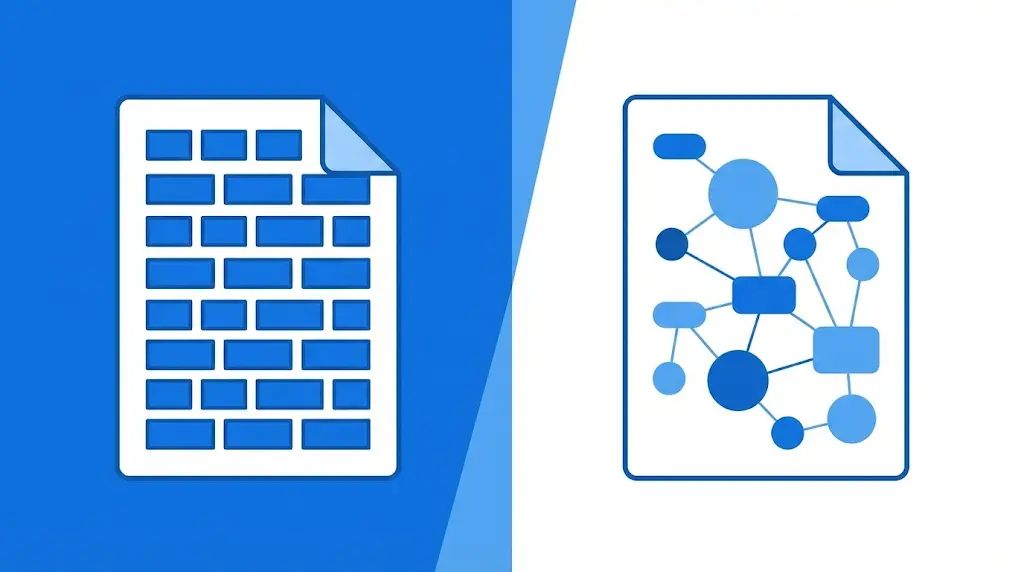
The End of Keyword Stuffing
Think back to the SEO articles from a decade ago. They were terrible, unreadable walls of text stuffed with robotic phrases like: "Buy enterprise CRM software cheap pricing CRM in New York buy."
They were written exclusively for web crawlers, not human beings. And historically, it worked. The more times you repeated the exact keyword, the higher your website ranked.
Today, this method is not just dead—it is computationally dangerous. For texts like this, Google’s Helpful Content Update (HCU) and AI spam algorithms will mercilessly penalize your entire domain.
The era of old-school SEO has been replaced by LSI Copywriting. Let’s break down exactly what this algorithm is and how to engineer content that dominates search results in 2026.
1. What is LSI? (Explained Simply)
LSI stands for Latent Semantic Indexing. The term sounds like complex data science, but the underlying logic is simple.
In the past, search engines were "dumb": they only looked for exact word matches. Today, search engines are driven by AI: they try to understand the meaning of the text and the user's search intent.
How do they do this? By analyzing the context—the mathematical relationship between the words surrounding your main keyword.
The "Server" Example:Suppose you write an article about a "server." How does Google’s algorithm know if you are talking about a person working in a restaurant or a piece of IT infrastructure?
- If the text contains words like: restaurant, tips, menu, food, customer service — it’s a hospitality article.
- If the text contains words like: cloud, uptime, data center, hosting, AWS, cybersecurity — it’s an IT article.
These surrounding contextual words (cloud, uptime, AWS) are called LSI keywords or semantic associations. They mathematically prove to the search engine that your text covers the topic deeply and comprehensively.
2. Why the "Keyword Stuffing" Method Died
For years, copywriters chased "keyword density." A typical brief looked like this: "Use the phrase 'B2B accounting software' exactly 15 times in 3,000 words."
The fatal flaws of this legacy approach:
- Unreadable UX: Enterprise buyers opened the page, saw the spam, and immediately closed the tab. Your Bounce Rate skyrocketed, signaling to Google that your site is useless.
- Zero Business Value: The text did not answer the user's technical questions; it merely echoed their search query.
- Algorithmic Evolution: Google learned to detect over-optimized, unnatural phrasing and began penalizing it.
Today, Google's logic is strictly analytical: "If an author writes 'buy corporate laptop' 20 times, but never once mentions 'processor,' 'RAM,' 'battery life,' or 'warranty,' this text was written by a spammer, not an expert."
3. The Core Difference: Legacy SEO vs. LSI Content
LSI content is saturated with professional terminology and highly relevant industry concepts. It proves your topical authority.
4. How to Write LSI Content: A Practical Guide
You do not need to be a computational linguist to write LSI content. You just need industry expertise and a few basic tools.
Step 1: Forget "Exact Match"
You no longer need to butcher the English language with phrases like "SEO agency New York hire." Google’s Natural Language Processing (NLP) perfectly understands plurals, synonyms, and fragmented phrasing. Write naturally.
Step 2: Mine for LSI Terms (Semantic Context)
Where do you find the exact words that complement your topic?
- Your Own Expertise (Brainstorming): If you are writing about B2B SaaS marketing, you will inevitably mention churn rate, CAC, LTV, inbound pipeline, and onboarding. That is organic LSI.
- Google Autocomplete: Start typing your main query into Google and see what the system suggests.
- "Related Searches" & "People Also Ask": At the bottom of the SERP (Search Engine Results Page), you will find a goldmine of LSI phrases and subtopics.
- Competitor Architecture: Open the top 3 articles for your topic. Do not copy their text, but extract the professional terminology and subheadings they use.
Step 3: Write for the Buyer, Not the Bot
The golden rule of LSI copywriting is utility. Do not try to artificially stuff your text with the LSI words you found. If you are genuinely and comprehensively answering the B2B buyer's questions, the LSI phrases will appear in your text organically.
Summary
LSI copywriting is not a secret new algorithmic hack. It is simply a return to normal, high-quality, expert engineering of content.
Stop counting how many times you used a specific keyword. Start thinking about how thoroughly your digital asset solves the user's problem.
Read new articles:










Рентабельные рекламные кампании в Яндекс.Директ
Настроим и будем вести контекстную и таргетированную рекламу для вашего бизнеса
Создадим систему привлечения новых клиентов
Уменьшим цену входящего звонка и заявки
Увеличим заказы на маркетплейсах: Ozon, Yandex Market, WB
Подготовим понятные отчеты и аналитику